Most people know where to pet a dog or a cat, but what about a pet bird? It’s a bit more complicated.
Birds have a vastly different anatomy (they have feathers instead of fur) and touching the wrong spot can send unintended signals, as some areas are linked to mating behaviors. Keep in mind, birds are prey animals and each species is unique, so knowing how to pet is just as important as knowing where to pet your pet bird.
Where Do Birds Like Being Pet?
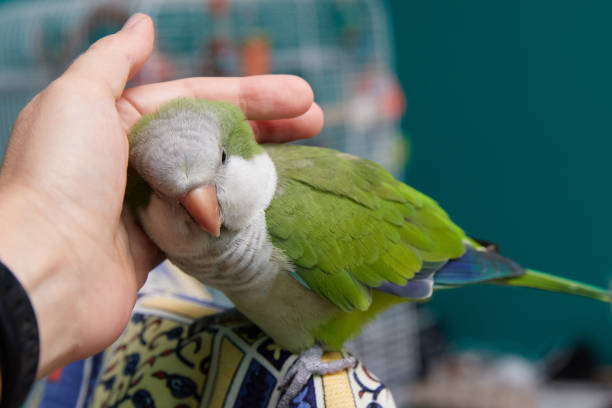
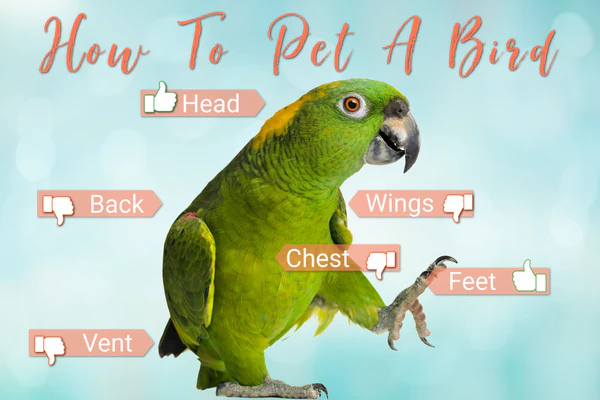
The most common areas birds like to be pet are around their head and neck, which are also the only areas you should pet your bird. Petting below the neck area can stimulate a bird’s hormones and lead to breeding behavior.
Here’s where pet birds like being pet:
Head Feathers
In the wild, birds preen their flockmates to bond and help remove the keratin sheath from new “pin feathers.” Because they can’t reach their own head feathers, they enjoy having these out-of-reach areas preened for them.
Many birds enjoy being pet on top of their head, especially above their beak and on the back of their head.
Face Feathers
A bird who enjoys petting might turn their head to the side to offer you access to their cheek/chin area for petting. Facial feathers are especially sensitive, so even the slightest petting can make your bird’s feathers fluff up in this area—a sign that your bird is relaxed and enjoying being pet.
Around the ears is another preferred petting spot. Interestingly, petting around the ear can induce a yawn from your bird.
The beak area is sensitive, so your bird might prefer lighter strokes here.
Neck Feathers
Many birds enjoy having the feathers on the back of their neck pet or gently scratched to remove the sheath off pin feathers.
Lightly stroke the back of your bird’s neck area in a smooth, gentle motion. If you slowly move your fingers up as you pet, your bird might fan out their neck feathers so you can get underneath and closer to their skin for gentle scratching.
Watch for your bird’s reaction to gauge comfort. Fluffing out their feathers can signal relaxation, while holding their feathers tightly against their body can be a sign of stress.
Remember, anywhere below your bird’s neck area is hands-off for petting and should be avoided. This includes your bird’s belly, down along their backside, and under their tail feathers.
Many birds interpret petting in these areas as mating advances, according to Kristina Palmer, RVT, VTS (Clinical Practice-Exotics), Animal Care Hospital Supervisor at UC Davis William R. Pritchard Veterinary Medical Teaching Hospital. Inappropriate petting can lead to confusion or stress for the bird, and, in some cases, it can cause behavioral or medical issues over timesuch as hormonal imbalances or aggression.
How To Pet a Bird
Getting your bird comfortable with touching and petting takes patience as you learn their body language and they learn to trust you.
Forcefully petting your bird is trust-destroying and can make your bird fearful. Petting parakeet (also known as budgies) can be especially challenging if they haven’t been socialized from a young age, and their quick and flighty nature might necessitate even more patience.
Palmer shares these foundational tips to help get your bird comfortable with petting:
1. Build Trust Gradually
Respect your bird’s space. Let your bird get used to your presence, and resist trying to pick them up right away. Allow the bird to come to you.
2. Use Positive Reinforcement
Reward your bird with praise or a healthy bird treat when they allow petting. Your goal is to have your pet bird associate touch with positive experiences.
3. Create a Calm and Safe Environment
Find a quiet, stress-free setting. The area should be free of loud noises or sudden movements that might spook your pet bird. Choose a time when your household is quiet and free of people coming and going.
Give your bird the opportunity to explore their surroundings. Offer bird toys or use treats to create foraging opportunities to keep them occupied and to build their confidence around you in a nonthreatening way.
4. Start With Small Interactions
Let your pet bird approach you and start slowly petting with one finger.
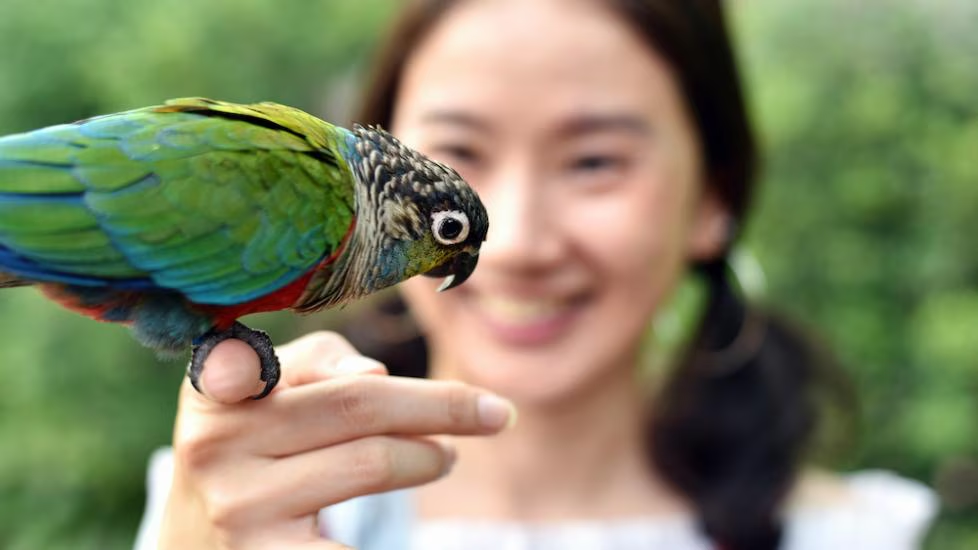
Once your bird is comfortable with your presence, try offering your hand or finger—but go slow. Coming in fast can startle the bird, and you want your bird to see your hand as a safe place to perch and stand on.
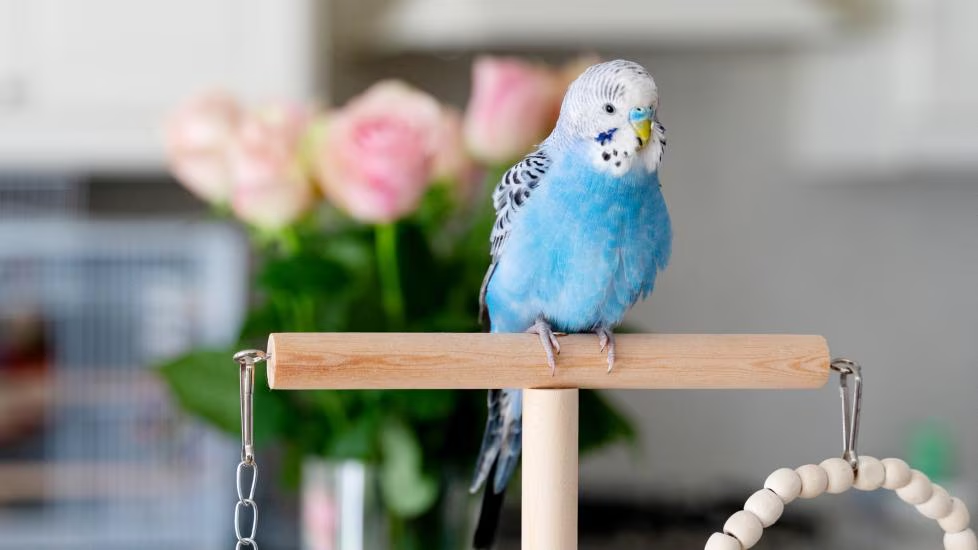
Budgie petting, for one, requires a slow-hand approach. Otherwise, you’re likely to see a quick flutter of feathers as the bird tries to flee.
5. Teach Your Bird To Step Up
Step-up training is a simple yet important behavior if you wish to hold and interact with your bird.
Hold your hand or finger near your bird’s chest and gently encourage them to step up onto you. Reward them with a favorite treat and offer praise. Use a cue phrase like “step up” each time you offer your hand so that your bird associates that phrase with you offering a steady hand to step up on.
Or instead of your hand, consider using a bird rope perch, which is easier for your bird to grip and step up on than your hand, says Ann Brooks, co-founder of the Phoenix Landing Foundation and an IAABC-certified behavior consultant, based in North Carolina.
Watch: You’re Petting your Bird ALL Wrong!
https://www.youtube.com/watch?v=Em2lAfPNazo
Summary
- Many pet birds like being pet around their head and neck.
- Let your bird get used to being pet slowly.
- Use positive reinforcement when petting your bird, including treats, toys, and verbal praise.