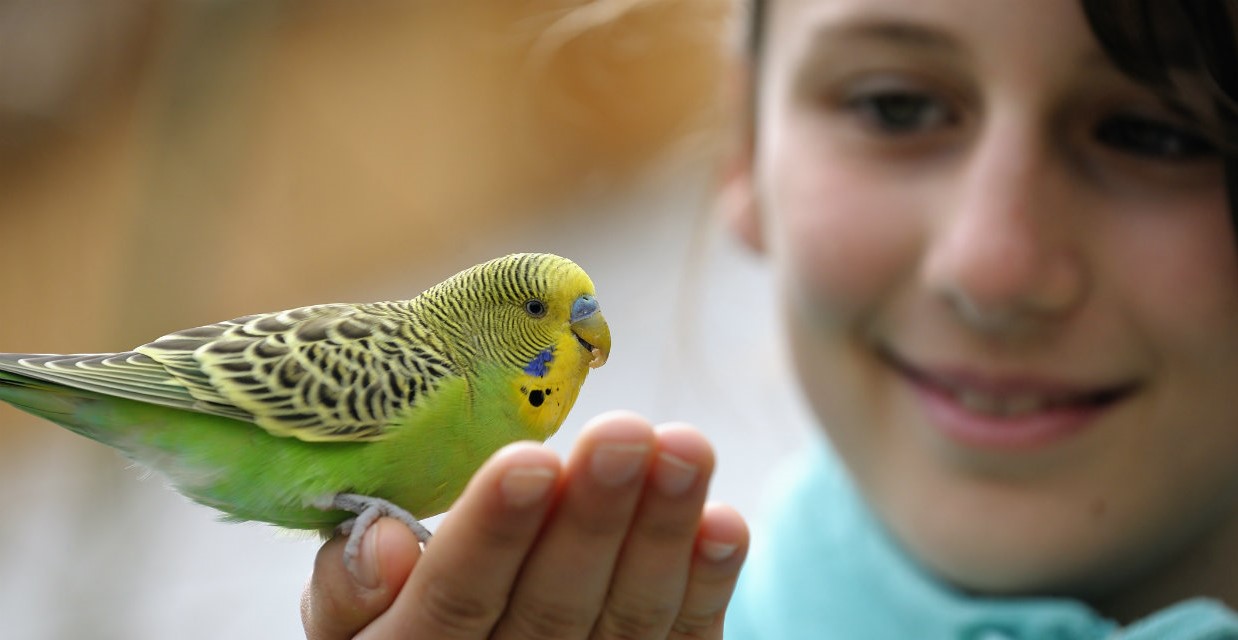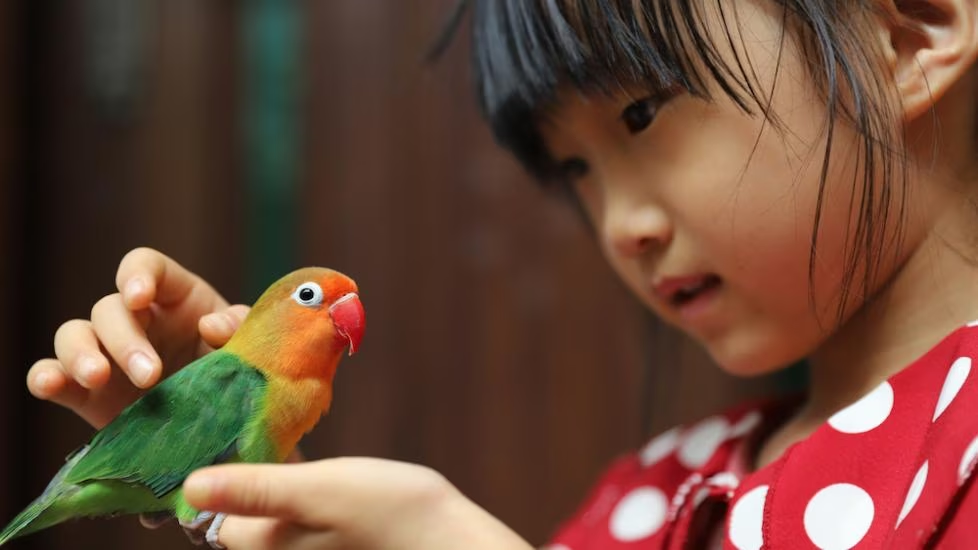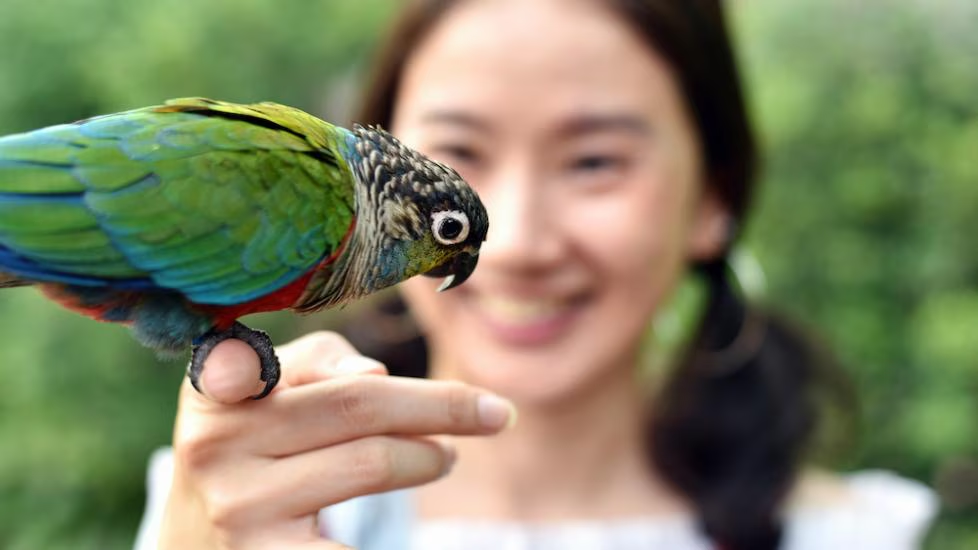
If you’re looking to adopt your first bird, you may be wondering what to know when it comes to training your new pet. Are birds easy to train? What kind of bird is easiest to train? Is it even possible to train birds? These are all good and important questions—read on to find out what you need to know about teaching birds.
Are Birds Easy to Train?
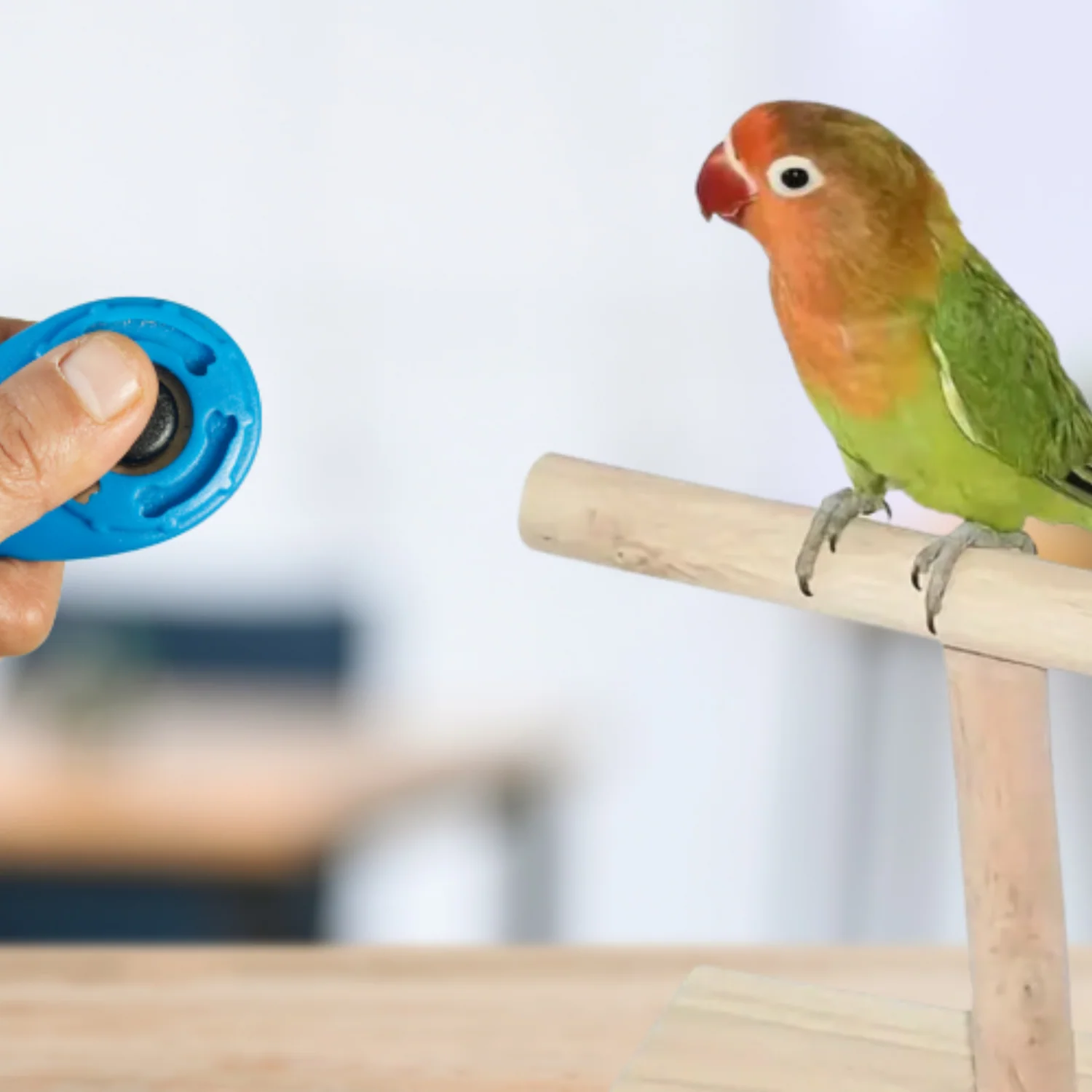
Every bird is an individual. Many factors play a role in how easy or how difficult it will be to train your pet bird, including how much time you have to dedicate to training.
The age of the animal and how it has been handled before you adopted it can also affect their trainability. Some bird species tend to be easier to train than others, but every individual bird will be different.
Some birds that are often easy to train include:
- Budgerigars
- Cockatiels
- Conures
- Indian ringnecks
- Younger birds and birds that have been handled frequently
Challenging birds to train include:
- Amazon parrots
- African grey parrots
- Macaws
- Conures
Very challenging birds to train include:
Are Birds Smart Enough to Train?
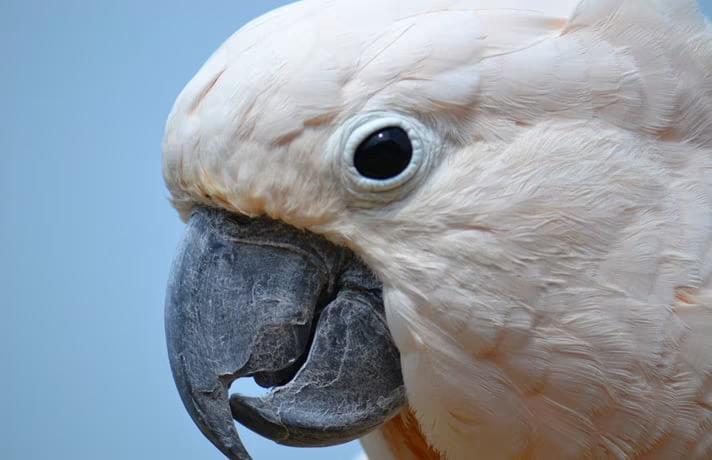
Birds are incredibly intelligent and many birds love to talk, particularly those that are in the parrot group. They can learn and even understand basic language concepts. They know what they want, and often figure out how to best get it.
Crows have been reported to be as intelligent as the average 7-year-old child, and African grey parrots can match the wits of toddlers. Some species can use tools, solve problems, and even count, while other bird species have remarkable memories.
This means that not only are birds smart enough to learn several tasks, tricks, and phrases—they are also intelligent enough to make the process difficult, if they choose to do so.
How Do You Train a Bird?
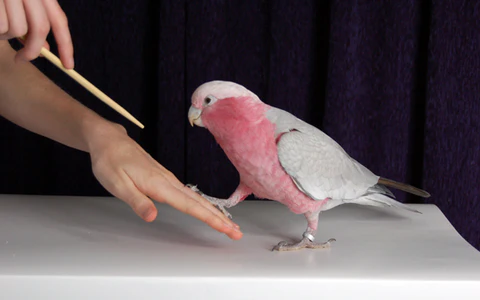
The first step in training your bird is forming a strong relationship with them. In the very beginning, this may mean spending time together, playing with your bird, and offering treats.
Your bird will need to trust you and want to spend time with you in order to start training. If your bird is shy or skittish, it’s important to work on confidence and acceptance into the human flock first, before tackling any significant training.
The first thing to teach your bird is the command “step up.” This is important for all birds to know and is the baseline for more advanced training. In fact, this command could prove lifesaving for your bird down the line, as this trick is especially helpful when bringing your bird to the vet or administering treatment. “Step up” is simply the act of having your pet step onto your hand.
How to Teach Your Bird “Step Up”
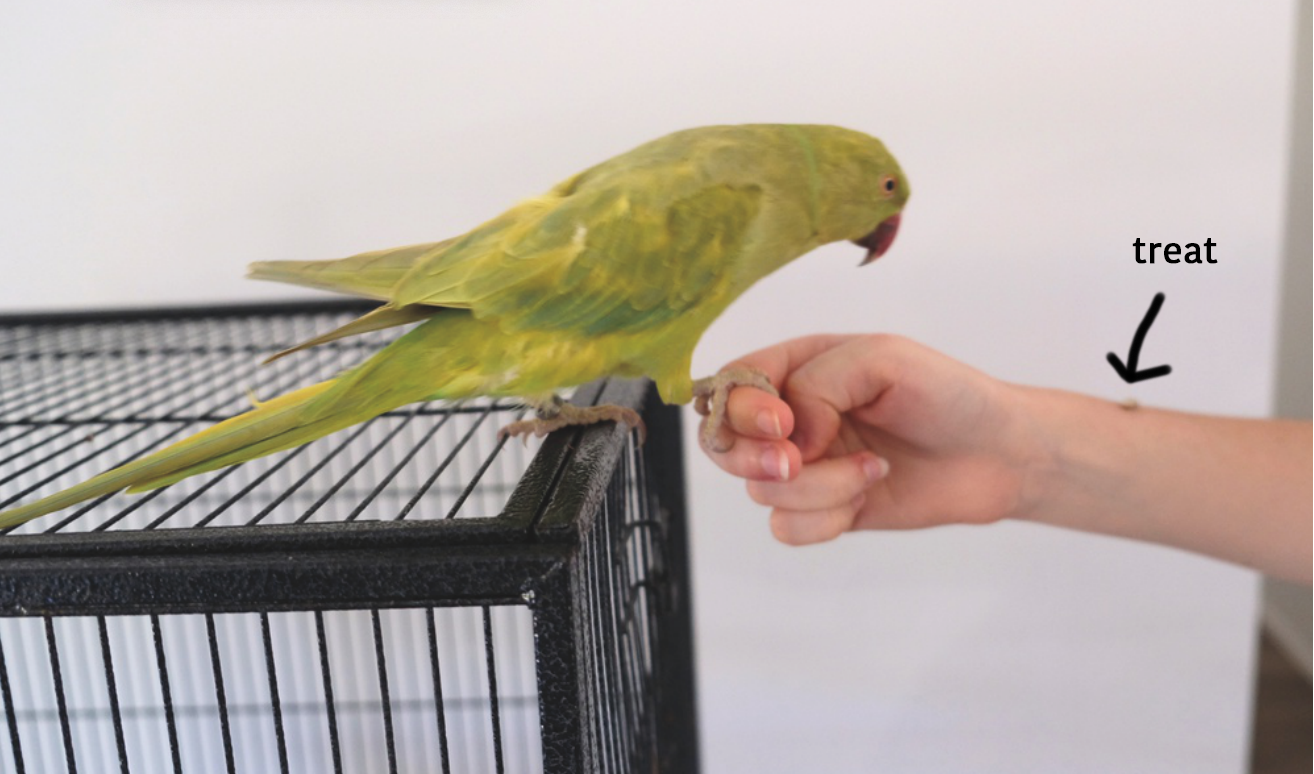
- Start with the bird on a perch or other curved surface.
- Press your finger gently against the bird’s lower chest/belly so that they feel a little off balance. They will generally lift one foot when they are looking for security; this gives you the opportunity to put your finger under the foot and lift gently.
- As you lift, say the command “step up”. When you repeat this multiple times every day, your bird will start to associate the command with what you want him to do—step up onto your hand.
- Remember, you need to keep your hand very steady for this to work. If you are nervous or afraid of your bird, they will be scared too. Confidence is contagious!
- Keep in mind, you must teach your bird to step up to either hand. Since birds are creatures of habit, show them that this command works in a variety of different scenarios
- Once your bird will perform the command consistently with you, start to teach them to step up with other members of the family and friends.
Once your bird has learned “step up” onto your hand, you can start having them step up onto a stick. Sometimes, the biggest challenge here is getting your bird used to and comfortable with the stick, and this can take time.
Gradually move the stick closer to the cage and eventually into the cage for the bird to explore. Never push your bird into the next step of training; it will only move you backwards in the long run.
These basic training steps can be used to slowly teach your bird more useful commands, such as returning to their cage or a specific place, potty training, and basic bird manners.
Watch: How to Make Your Bird Step Up
https://www.youtube.com/watch?v=1-MyAYdRl18
Teaching Your Bird More Advanced Skills
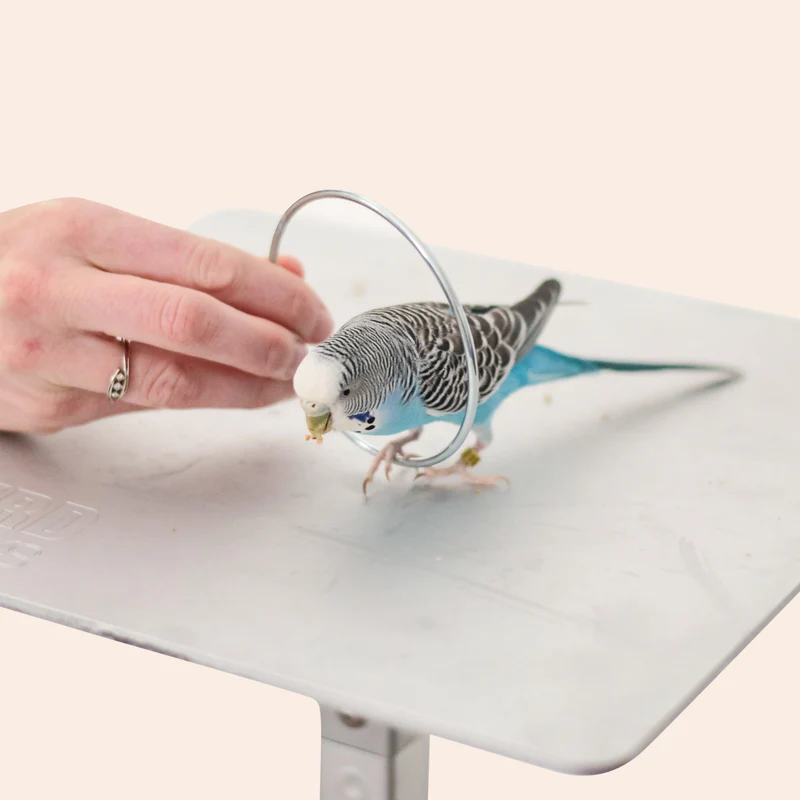
Once your bird can reliably step up and has learned some basic bird manners, it’s time to consider teaching tricks.
This might include talking, which many people enjoy and is perhaps the easiest trick to teach.
- Pick a very easy word or phrase to start with, such as your bird’s name, or “hello!”
- Repeat the phrase over and over—repetition is the key to your bird learning the word.
- Consider using a CD or tape recorder to allow your bird to hear the word even more frequently.
- Be patient. Human speech is not natural for birds, and some can take a very long time to learn words and phrases.
Once they learn one, however, it does get easier to learn more words. If your bird isn’t learning quickly, consider teaching him how to whistle first. It can take months for a bird to learn words, so be patient.
Other tricks to teach your bird might include:
- Waving
- Dancing
- Spinning
- Turning around
- Playing “dead”
- Taking a bow
- Fetch
All training takes time and patience with a bird that is interested and eager to learn. Birds can learn to do just about anything that dogs can do so use your imagination and keep those tricks coming. Remember to circle back and revisit “old” tricks as well, to keep them fresh and top of mind. Your bird will never stop amazing you with what they can learn.
Summary
- Whether a bird is easy to train depends a lot on its species, age, personality, and how much time you spend with it. Younger birds or birds that have been handled often tend to be easier to train.
- Many birds are intelligent enough to learn words, tricks, or commands — some even understand basic language concepts.
- The first and most important command to teach a pet bird is “step up” (i.e. stepping onto your hand). This is fundamental for handling, vet visits, or moving the bird safely.
- To teach “step up”:
- Gently press your finger against the bird’s lower chest so it feels unbalanced and lifts a foot.
- When it does, place your finger under that foot and lift — and say “step up.” Repeat daily until the bird associates the command with the action.
- Use a steady, confident hand; don’t rush or force it — trust and calmness help a lot.
- Once “step up” is mastered, you can move on to other commands or tricks: returning to cage, stepping onto a stick, “step down,” etc.
- Birds can also learn fun or advanced behaviors: talking, waving, dancing, fetching, playing dead, etc. But teaching these requires patience, consistency, and respecting your bird’s pace.
- Training works best when based on positive reinforcement — rewarding desired behavior with treats or praise — rather than punishment.