Pet hamsters need exercising, just as you do too. Providing opportunities for adequate exercise and for promoting your hamster's curiosity is an important part of maintaining your hamster's good health. Try some of the following fun ways to get your hamster to exercise.
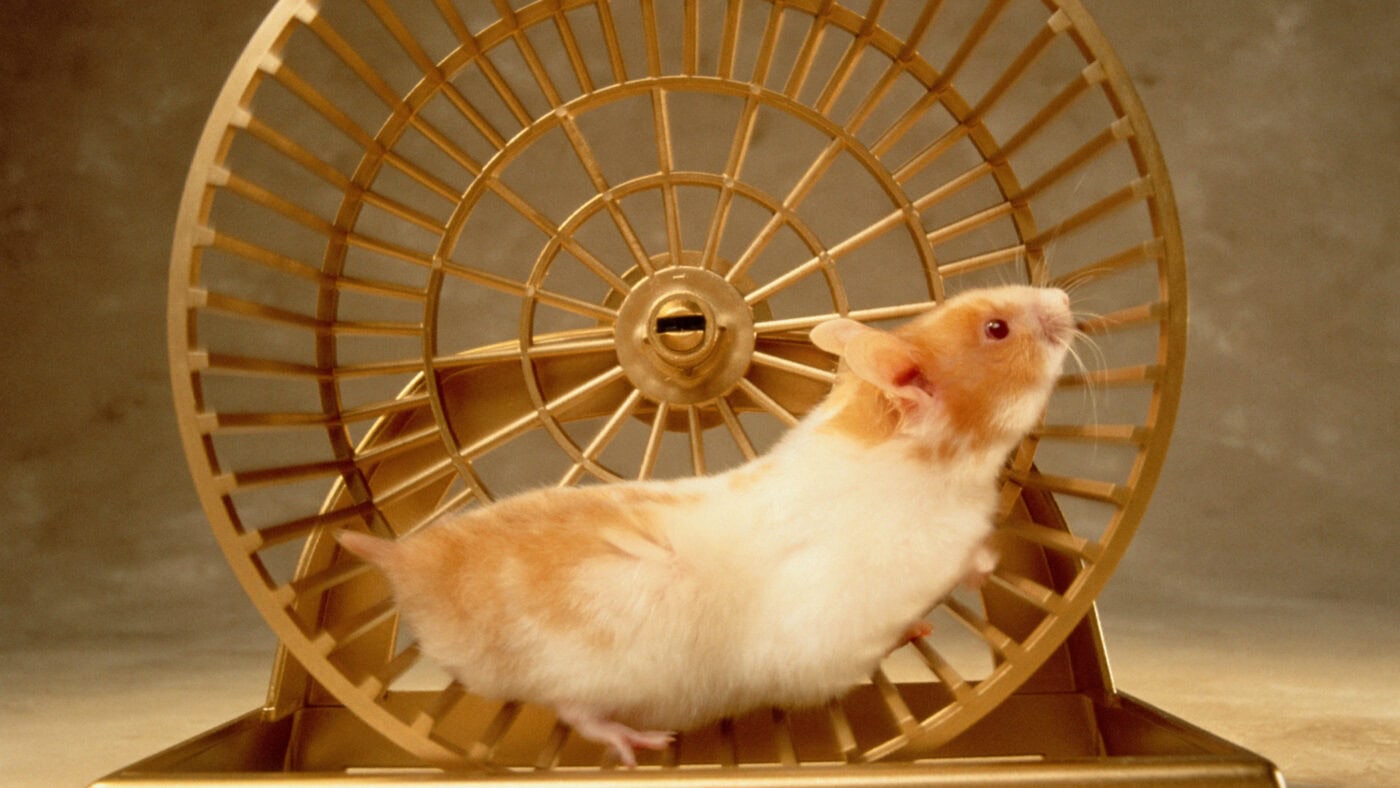
Provide a hamster wheel or "tread-wheel"
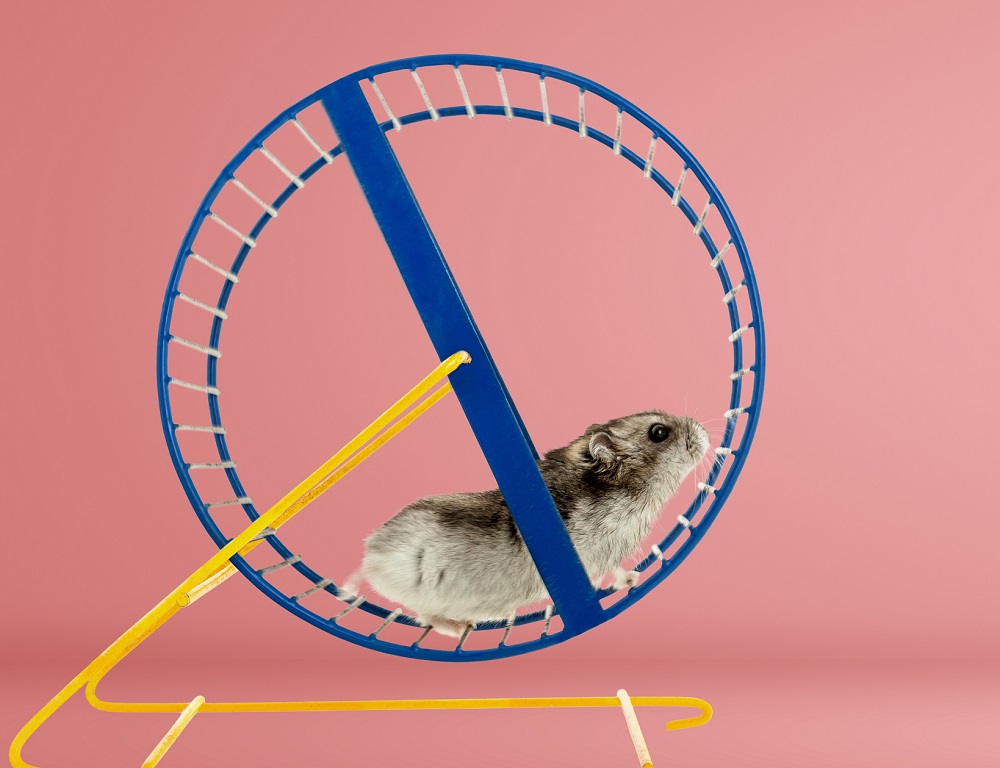
This is a wheel that turns about when the hamster steps inside and causes the hamster to run as he continues to turn it around. When choosing a hamster wheel or tread-wheel, the following is recommended:
- Ensure that the wheel is solid. If your hamster chews a great deal a solid metal wheel is best. Never use a mesh or barred wheel - these can cause serious injury because the feet can get stuck between the slats or bars.
- Check the wheel for size. Syrian/Golden hamsters need wheels that are at least 8" in diameter although 10" plus-sized wheels are guaranteed to be large enough for their entire life. Dwarf species require wheels to be a minimum of 6.5" in diameter. Wheels that are too small can cause severe back problems and is often a reason for hamsters not using them and subsequently becoming bored.
- Don't place a hamster wheel into a cage with a nursing mother; the mother may lose interest in her young and young hamsters tend to try to get in the wheel together and run on top of one another, thereby creating the potential for injury.
Give your hamster a hamster ball
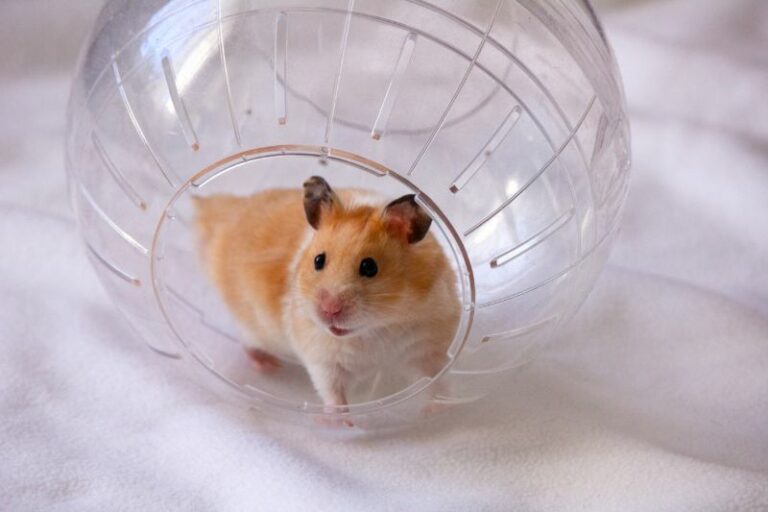
A hamster ball is another great way to give your pet some fun exercise in a safe way. The beauty of a hamster ball is that your hamster cannot fit under anything and get stuck; just make sure that the lid to the ball is closed tightly so that your hamster doesn't get loose. Also make sure that there are no stairs or other drop-offs that your hamster could roll over. As with wheels, ensure that they are large enough to prevent damage to their spines.
- When using a hamster ball outside the cage, be present at all times so that you can fend off any other pets or hazards before they turn into a problem.
- It is a good idea to lay down a hula hoop on the floor to provide a boundary that prevents the hamster ball from going anywhere else. You should still watch your hamster in the ball but this makes it easier to keep your hamster in one place.
Provide the ability to indulge in climbing
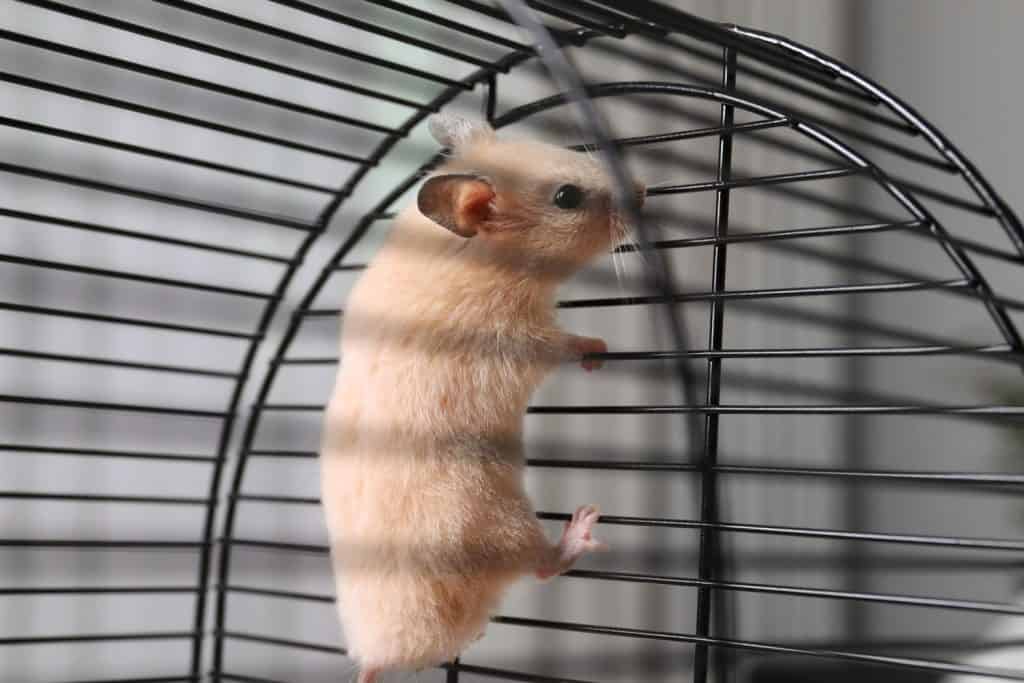
Hamsters love to climb, which is why providing a cage with horizontal bars on it is a great way to encourage your hamster to climb (it also provides terrific ventilation). Of course, the downside for you of a bar cage is that the mess drops out easily. Try to find ways to deal with this, such as having newspaper laid across the surface where the cage sits, or locating the cage inside a much larger base container to catch things that fall out.
Provide toys
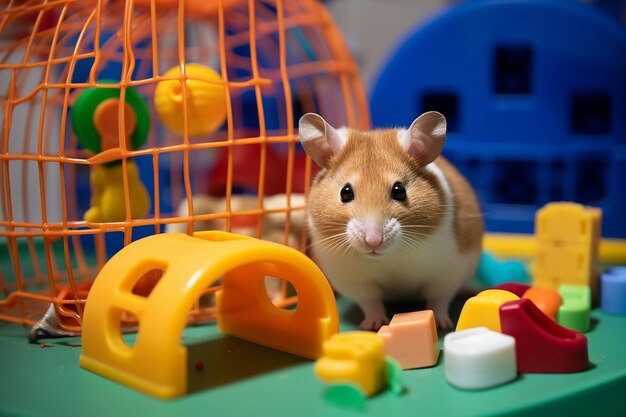
Play is exercise and toys are the tools of play that lead to exercise. There are quite a few hamster toys you can improvise, or you can buy them from the pet store if preferred. Here are just some ideas to get you started:
- Build hamster toys out of household items such as empty kitchen and toilet paper rolls. These are very similar to the movement provided by the hamster ball, these will delight the hamster for ages until he discovers he can chew it up too!
- A stump of wood or tree twigs taken from fruit or willow trees. These will give the hamster something to chew on (jaw exercise) as well as material to carry about and build with.
- Small smooth stones or pebbles of interesting shapes: These could act like mini-weights, as the hamster carries them about, rolls them, and tries to build things with them.
- Tin cans which have had all sharp ends removed. This can make a good metallic tube for the hamster to explore.
- Boxes with multiple openings. This can provide good exercise through hunting and seeking to get through and around the boxes. You could also place differently sized boxes inside a large container to make an open playpen for your hamster to explore.
Frequently Asked Questions
How to make hamster cage more fun?
Lots of chew things for your hamster to have a nibble on will give them something to get up to . They love to chew on different materials, and it actually keeps them quite entertained! Changing up the chews in their cage every time you clean it out will keep them interested.
Watch: How to PROPERLY Set up a Hamster cage
https://www.youtube.com/kaVqfcZTA7E
How much exercise do hamsters need a day?
Hamsters should engage in exercise for 2 to 3 hours each day. This can be achieved through various activities such as running on a wheel, exploring their environment, and playing with toys.
Watch: Hamster Training and Daily Exercise Routines ♥️
https://youtu.be/Bw44tMu4Vn715Qsf
Tips
- Not all hamsters will enjoy a tread-wheel. Don't force your hamster to use exercise equipment it doesn't like; it's no different from you preferring different ways to exercise.
- Never force a hamster into a ball, allow them to go into it and only close the lid if the hamster is willing to stay on its own. Not all hamsters enjoy balls.
- Make sure the door of the ball and cage is shut; you don't want to track down a fast-moving hamster.
- Hamsters climbing on their cage bars can be a stress behavior and it may be a good idea to provide your hamster with a different habitat instead.
- Be aware that some hamsters can become a little too attracted to their tread-wheel and turn obsessive about using it. If you notice your hamster using the wheel non-stop to the point of exhaustion, take action to prevent this from continuing. Simply remove the wheel from the cage for all but a few hours each day.