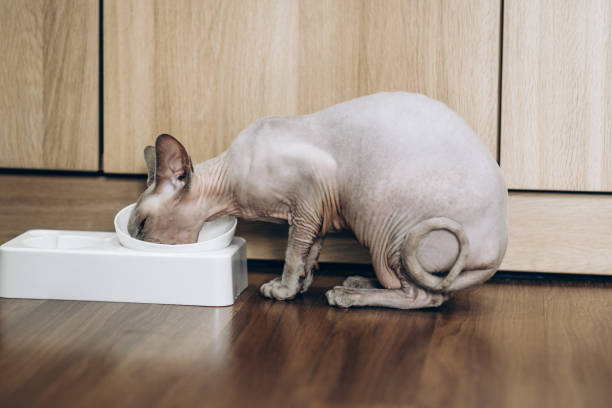
Sphynx cats are active and require a high-quality commercial diet that gives them the energy they need. Feeding your hairless cat food that meets the Association of American Feed Control Officials’ (AAFCO) nutritional guidelines for their life stage will provide essential nutrients and vitamins.
Like all cats, Sphynx kittens should be fed food formulated specifically for kittens or all life stages. When they’re around 1 year old, kittens should switch to food formulated for adults.
How To Feed a Sphynx
To prevent you cat from becoming bored, incorporate food puzzles, lick mats, and foraging into your cat’s mealtime. Sphynxes are incredibly intelligent, and love using their dexterous paws to mimic natural foraging and hunting instincts.
That said, cats aren’t known to be good at regulating their food intake, so provide several small meals throughout the day. Leaving food out for them to eat freely can lead to obesity.
How Much Should You Feed a Sphynx?
There are no one-size-fits-all portion sizes for cats. Instead, the number of calories your Sphynx cats should consume depends on their age, lifestyle, and ideal body condition.
Sphynxes have a higher metabolism than most other cat breeds, and a charming, round belly rather than a slim build. While bags and cans of cat food offer feeding guidelines, your veterinarian is the best resource for determining the right portion size for your cat.
Nutritional Tips for Sphynx Cats
A complete and balanced meal that meets the AAFCO's statement of nutritional adequacy will provide your cat with the necessary essential nutrients, vitamins, fats, and proteins. However, choosing high-quality food enriched with skin-healthy ingredients like omega-3 and -6 fatty acids may improve your naked cat’s health. Your veterinarian may also recommend additional supplements for any health issues your Sphynx is susceptible to.
Summary
- Feed a high-quality AAFCO-approved diet suited to their life stage, with vet guidance for proper nutrition.
- Offer multiple small meals daily and use food puzzles or lick mats to engage their intelligence and natural foraging instincts.
- Portion sizes depend on age, activity level, and body condition; vets can provide personalized calorie recommendations.
- Include skin-healthy nutrients like omega-3 and -6 fatty acids, and consider vet-recommended supplements for any health concerns.