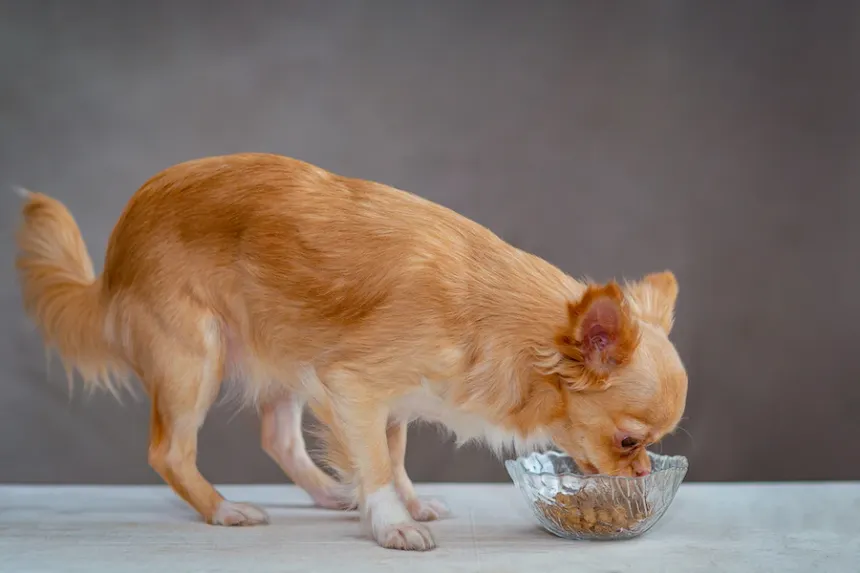
The average Chihuahua lifespan is 14-16 years; they're actually one of the longest-living dog breeds.
Along with of their long lifespan, Chihuahuas are generally healthy. But, like all dogs, they are predisposed to certain medical conditions.
Obesity
Weight gain can sometimes be difficult to notice, especially in long-haired Chihuahuas. The gain is usually due to poor diet and lack of exercise. Obesity in dogs can lead to diabetes, joint issues, and heart and respiratory disease.
Luxating Patellas
Patellar luxation is a condition where the kneecap slips out of its normal position, causing discomfort, limping, and arthritis if it becomes a chronic issue. These dogs will be seen occasionally skipping and holding up a back leg while walking.
Often, the patella returns back to the correct position on its own or with a gentle massage of the area. Surgery is recommended in severe cases.
An appropriate diet to avoid weight gain, regular exercise, joint supplements, and physical therapy can be helpful to prevent this condition from worsening.
Periodontal Disease
Periodontal disease, or dental disease, is commonly seen in Chihuahuas because it's easy for teeth to overcrowd their small mouths. This overcrowding leads to tartar build-up and plaque development. On top of that, many Chihuahuas retain their baby teeth, crowding the mouth even further.
Routine teeth brushing, dental cleanings, and surgical removal of any lingering baby teeth will help keep your Chi's mouth healthy.
Collapsing Trachea
Collapsing trachea is a condition where the main airway (the trachea) that allows air to enter and exit the lungs begins to collapse on itself. It's secondary to weakness in the cartilage that normally holds this tube open, and it's believed that genetics are the main cause.
Coughing (often described as “goose-honking”), wheezing, and respiratory distress are the main clinical signs. It is a chronic and progressive process, which means the signs will worsen with age. Mild cases often require no treatment, while moderate to severe cases require weight management, lessening allergens in the environment, and cough suppressants. If all other remedies fail, surgery might be recommended.
To protect their trachea, pet parents should walk their Chihuahua on a harness instead of clipping a leash to their collar.
Heart Disease
Congestive heart failure is the leading cause of death in older Chihuahuas and most often related to chronic degenerative mitral valve disease. This specific condition weakens the valve on the left side of the heart, causing blood to leak backward. This eventually leads to heart enlargement, increased stress on the heart, and congestive heart failure.
Chihuahuas are also prone to congenital heart issues such as patent ductus arteriosus (PDA), where a blood-carrying vessel doesn't close after birth, leading to an overload of blood being carried to the lungs. Clinical signs of heart disease include:
- Coughing
- Exercise intolerance
- Weakness
- Collapse
- Difficulty breathing
Often, your veterinarian will hear a heart murmur during an examination, which can be the first indicator of underlying heart disease. PDAs require surgery for appropriate therapy. Chronic degenerative valve disease is, unfortunately, a progressive process that can require lifelong heart medications and frequent monitoring by a cardiologist.
Hydrocephalus
Hydrocephalus is a congenital abnormality where fluid accumulates within the brain. Clinical signs include seizures, confusion, bulging eyes, weakness, and ataxia (a “drunken” gait). Mild cases are often medically managed, while severe cases may require surgery.
Eye Problems
Part of the Chihuahua's appeal is their extra-large, expressive eyes. But they can inherit a handful of eye conditions, including glaucoma, chronic dry eye, and cataracts. Clinical signs of these conditions include:
- Red eyes
- Bulging eyes
- Eye discharge
- Rubbing at the eyes due to pain
- Blindness
Eye conditions can be quite painful, so it's important to see a veterinarian if you have any concerns about your Chihuahua's eyes.
Legg-Calve-Perthes Disease
Legg-Calve-Perthes disease is a degenerative hip condition found in Chihuahua puppies, typically between the ages of 6-9 months. It's thought to be caused by decreased bloody supply to the hip and is characterized by the ball of the hip bone starting to die off, leading to pain and fracture.
The condition can be remedied with surgery to remove the ball of the femur bone, which will decrease pain and improve your pet's quality of life.
Reproductive Issues
Chihuahuas have a large, domed skull and a small body—including a small pelvis. Therefore, it can be difficult for females to pass the large heads of Chihuahua puppies through their birthing canals. C-sections are sometimes necessary and are often performed with planned pregnancies for this breed.
Hypoglycemia
Hypoglycemia, or low blood sugar, is a condition seen often in this breed due to the dogs' small size. Most often seen in young Chihuahuas, it's often managed with appropriate diet and frequent feedings. Clinical signs include severe lethargy, decreased appetite, weakness, collapse, or seizures. Severe cases require hospitalization on intravenous fluid therapy with sugar supplementation.
Watch: 10 Signs To Tell If Your Chihuahua Dog is Healthy
https://youtu.be/_FVNkyB9s9A
Summary
- Chihuahuas have an impressive 14-16 year lifespan and are generally healthy, but like all breeds, they are predisposed to specific health conditions that owners should monitor throughout their lives.
- Obesity is common in Chihuahuas and can be difficult to spot in long-haired varieties, leading to serious complications including diabetes, joint problems, and heart disease if not managed with proper diet and exercise.
- Small mouth structure makes Chihuahuas particularly prone to periodontal disease due to overcrowding teeth and retained baby teeth, requiring routine brushing, professional cleanings, and potential tooth extractions.
- Heart disease, especially chronic degenerative mitral valve disease, is the leading cause of death in older Chihuahuas and may require lifelong medications and monitoring by a cardiologist.
- Their small size and unique anatomy predispose Chihuahuas to multiple conditions including luxating patellas, collapsing trachea, eye problems, hypoglycemia, and reproductive difficulties requiring C-sections for safe breeding.