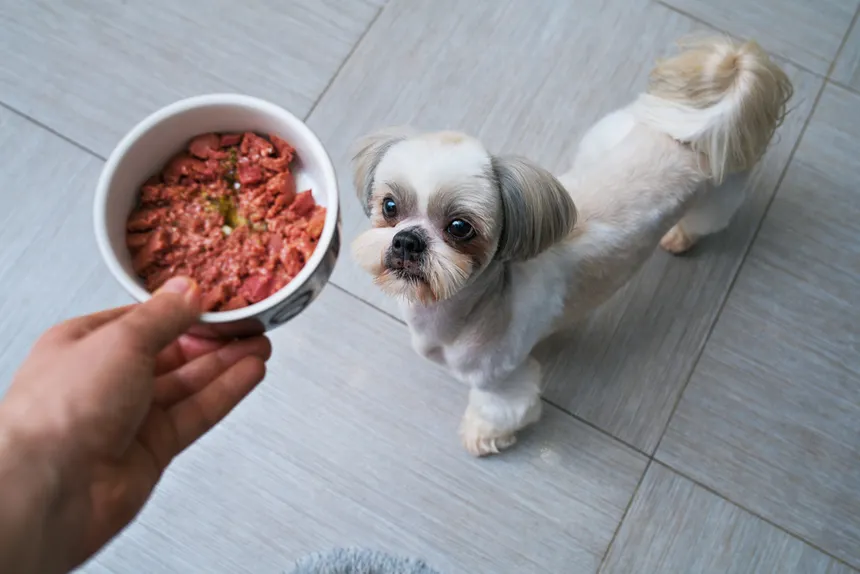
Shih Tzu are prone to obesity, so it's important to feed them a well-balanced diet and to avoid too many treats throughout the day.
The Best Diet For Shih Tzu Puppies And Dogs
A twice-daily, balanced adult small-bite diet is recommended.
Pet parents should also consider feeding their Shih Tzu dry kibble instead of canned food to lessen the risk of periodontal disease, as dry kibble is abrasive and can remove some plaque buildup. A dental-specific diet, like Hill's Science Diet Oral Care, can also be beneficial.
You can also find food formulated specifically for adult Shih Tzu dogs and puppies.
How To Feed A Shih Tzu
Shih Tzu puppies need to eat frequent meals (about three or four every day) to avoid risks of hypoglycemia (low blood sugar). High-fat, protein, and complex carbohydrate meals will lessen the risk of low blood sugar issues, and well-formulated puppy small breed diets usually contain all of these components.
Slowly transition your Shih Tzu puppy to an adult dog food when they're around 1 year old.
Your veterinarian can help you figure out how much to feed your dog to avoid weight gain.
Nutritional Tips For Shih Tzu
If your Shih Tzu is eating a dog food that meets the Association of American Feed Control Officials (AAFC) guidelines, they shouldn't need any extra supplementation unless recommended by your veterinarian.
Dog supplements that can support the health of this breed include omega fatty acids, which are good for your Shih Tzu's heart, brain, skin, and joints.
Your vet may also recommend dental chews to lessen the risk of periodontal disease.
Watch: A Vet-Approved Guide to Feeding Your Shih Tzu
https://youtu.be/QnOQ8cHD-wA
Summary
- Shih Tzu are prone to obesity, making it essential to feed them a well-balanced diet with limited treats throughout the day to prevent weight-related health complications.
- Adult Shih Tzu should be fed twice daily with small-bite balanced diets, while puppies need three to four frequent meals per day to prevent hypoglycemia (low blood sugar) risks.
- Dry kibble is strongly recommended over canned food for Shih Tzu to reduce periodontal disease risk, as the abrasive texture helps remove plaque buildup, with dental-specific diets providing additional benefits.
- Shih Tzu puppies should be fed high-fat, protein, and complex carbohydrate meals from well-formulated small breed puppy diets, then slowly transitioned to adult food around 1 year of age with veterinary guidance.
- AAFCO-compliant dog foods provide complete nutrition for Shih Tzu, though veterinarians may recommend supplements like omega fatty acids for heart, brain, skin, and joint health, plus dental chews to prevent periodontal disease.